 Check PH · Independent guide
What happens in a Chicken Road round
Chicken Road is a single-player game from INOUT Games. A chicken moves through a sequence of dangerous steps toward a golden egg. You choose how much to stake and which difficulty to use. During a surviving round, the decision is whether to take the displayed return or attempt another step. A failed step ends that attempt. This is why “how far can I go?” and “when will I take the return?” are different questions.
Think of the round as one purchase of a risky sequence, not a string of unrelated free chances. Suppose you stake ₱100. That amount is exposed when the round starts. A displayed 1.50× cashout would return ₱150, including the original ₱100. If you continue instead and the next attempted step fails, the earlier displayed opportunity is not money you already withdrew. You chose to keep the round open. The lost stake is ₱100; the unclaimed ₱150 is a return you could have taken, not an additional ₱150 debit.
The distinction matters because the screen can make a growing amount feel owned before it is settled. Until you complete a cashout, it remains part of the current gamble. Decide what action ends your round before beginning. This might be one completed step, a chosen displayed multiplier, or simply a short practice exercise using virtual credits. None of these choices removes the chance of losing the stake.
A successful in-game cashout and a withdrawal from a casino account are separate events. The first settles a game round. The second asks the operator to transfer funds through an available payment method. A screenshot showing a win does not demonstrate a completed bank or wallet transfer. Our cashout and GCash guide walks through that distinction using the information you should retain at each stage.
A cashout is a decision, not a withdrawal
Illustrative multipliers, not an official Chicken Road ladder or a recorded round.
Read the controls before the first step
Start with the game title and provider, then identify the stake, selected difficulty and action buttons. This is our original-demo capture from 3 November 2026. The chosen stake is 1 USD, the mode is Medium and the offered cashout is 1.98 USD after five safe steps. That offer includes the stake; it is not 1.98 USD of profit. The large balance is virtual credit, not a real deposit.
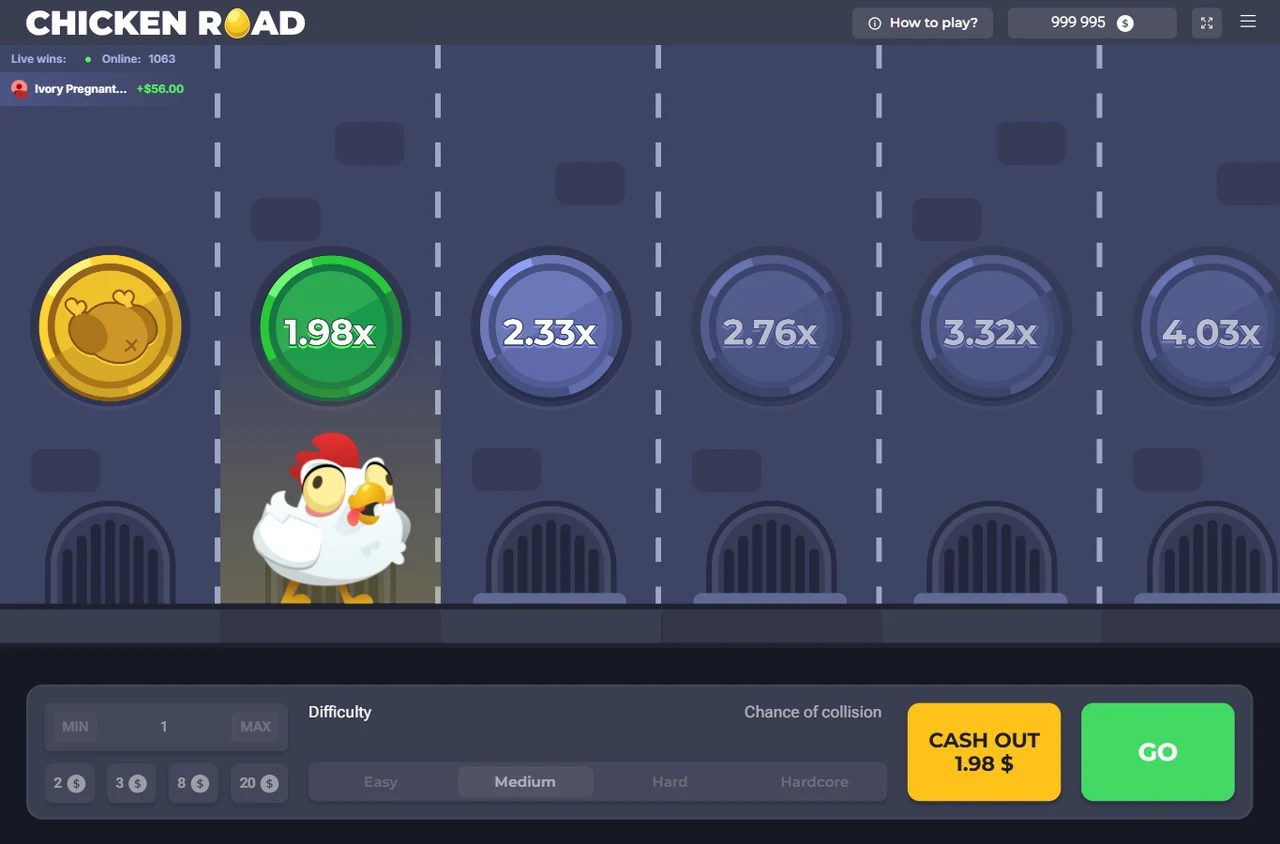
The stake is the amount committed to a new round. Quick amount buttons are shortcuts, not recommended bets. If you change currency, site or edition, read the displayed unit again. A “10” in a USD demonstration is not ₱10. A virtual balance is not a peso account, even if the same digits appear. Keep examples in their original units when comparing screenshots with your own screen.
The difficulty selector changes the risk profile of the game. Read it before starting, rather than assuming the last used setting is still selected. A control that is unavailable during a round should not be forced by reloading or repeatedly tapping. Finish the active decision first. When a game is loading or reconnecting, wait for the client to show the settled state before trying another action.
Cash Out settles the displayed opportunity when the game accepts the action. GO is the decision to proceed. These controls have opposite consequences, so do not use a screenshot as a coordinate map for another screen size. On a phone the buttons can be stacked or moved. Read their labels, particularly after rotating the device or entering fullscreen. Practice should include locating the stop action, not only finding the start button.
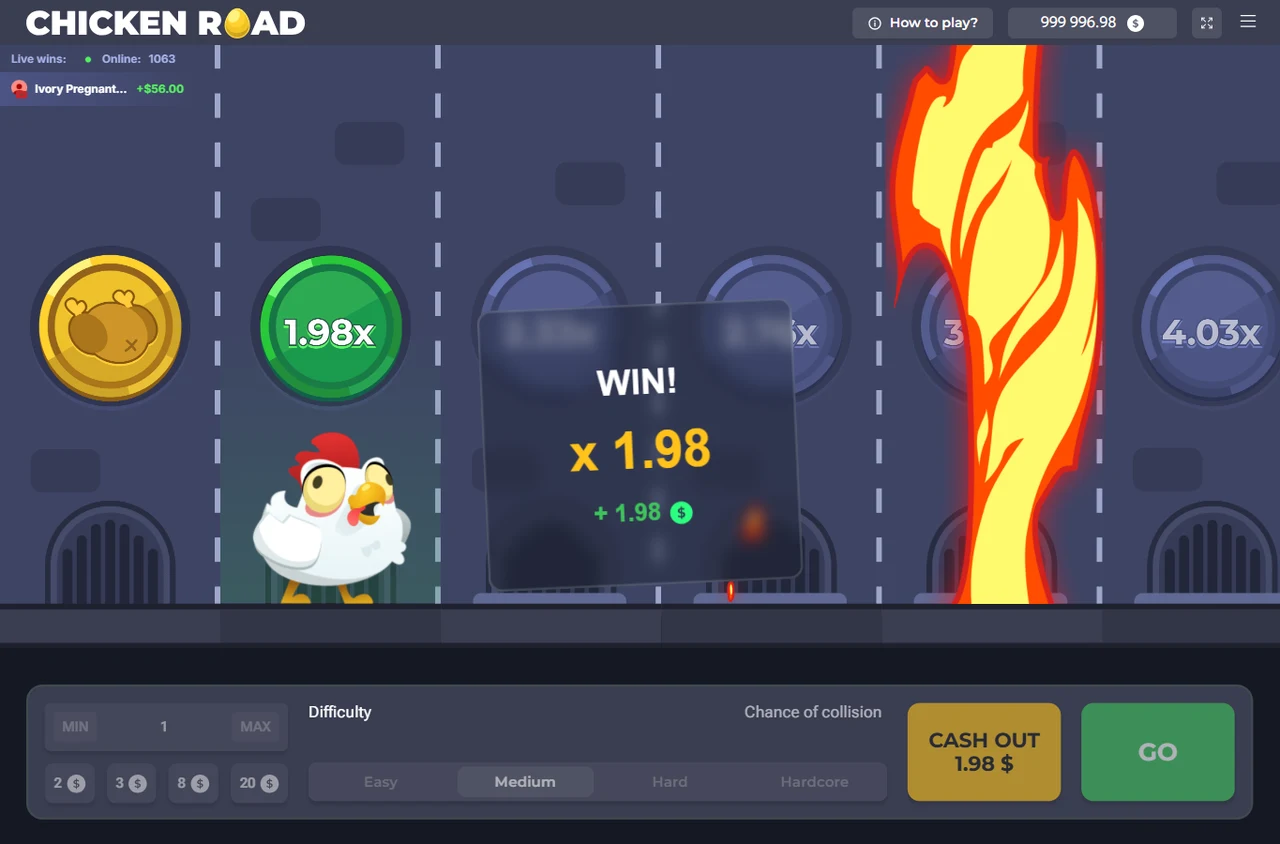
A result panel belongs to a completed game event. An animation, celebration or highlighted amount does not by itself establish that the account balance has been updated. Compare the balance before and after settlement if you are keeping a record. If the page freezes, retain the time and operator-provided transaction reference privately and check the history instead of assuming a win or loss from an unfinished animation.
Easy, Medium, Hard and Hardcore: what changes?
INOUT lists four difficulty levels for the original: Easy, Medium, Hard and Hardcore. The provider describes greater risk and larger possible multipliers as difficulty increases. That does not make the labels a complete probability table. You still need the rules shown in the client you actually open to establish its step values, limits and configuration. This guide does not fill missing probabilities with numbers copied from a different edition.
Easy can be useful for learning where the controls are and how a round ends. It should not be described as a safe way to earn money. Lower-looking multipliers can require a high success rate merely to recover losses. At 1.20×, one winning ₱100 bet produces ₱20 net. One lost ₱100 bet consumes the profit of five such winning bets. That arithmetic remains true however calm the animation looks.
Medium, Hard and Hardcore can make individual returns more dramatic while exposing the stake to a different risk structure. A screenshot of a spectacular Hardcore return tells you what that pictured outcome paid; it does not tell you how many attempts failed before it. A comparison needs both the return size and the chance of reaching it. Without a verified chance, you can calculate the payment but cannot calculate the actual expected return of a chosen step.
Compare like with like. “Three steps” on one difficulty need not mean the same multiplier or probability as three steps on another. “Cash out at 2×” is a different rule from “cash out after two steps.” The first follows a displayed payment target; the second follows a count. If the available ladder jumps from below your target to above it, state whether you would take the first available multiplier at or above the target. Otherwise the supposed strategy is ambiguous.
Keep the stake fixed while learning a mode so that changes in your result are easier to interpret. If you change stake, difficulty and exit target together, you will not know which choice changed your exposure. A small practice table can record those three settings separately, alongside the actual outcome. Read seven cashout and staking rules for worked comparisons, including why increasing a stake after losses is a separate decision from choosing a difficulty.
Stake, payout and net profit: three different numbers
The simplest calculation is payout = stake × settled multiplier. Net profit for that winning round is payout − stake. For a losing round with no returned amount, net profit is the negative stake. These three quantities should not share the same label. A return of ₱150 on ₱100 is a ₱50 profit, not a ₱150 profit. A returned ₱100 on ₱100 is break-even for that round, not a gain.
Now include the rest of the session. Suppose you lose two ₱100 attempts and then cash out a third at 2.50×. Total stakes are ₱300. Total returns are ₱250. The final winning round made ₱150 net, but the three-round sequence lost ₱50. Showing only the last payout makes the same history look more successful than it was. A useful record keeps every completed attempt and adds all stakes and returns.
Here is another hypothetical sequence: a ₱50 stake returns ₱75, the next ₱50 stake loses, and the third returns ₱100. You staked ₱150 and received ₱175, leaving ₱25 net. The three round results were +₱25, −₱50 and +₱50. This is an arithmetic illustration, not a recorded Chicken Road session. It shows why counting “two wins out of three” is insufficient without the multipliers and amounts.
A personal budget and total turnover also differ. Start with ₱500 and place ten ₱50 bets over time: turnover is ₱500, even if interim returns allow the balance to stay above zero. Play twenty such bets and turnover becomes ₱1,000. Your original deposit has not automatically doubled, but the money has been exposed to more rounds. When reading an RTP statement, the relevant base is aggregate stakes, not just the first deposit.
INOUT publishes 98% RTP for the original Chicken Road. It is a long-run theoretical return description, not a commitment to return ₱98 from your next ₱100 bet or session. It also does not mean a 98% chance of winning each step. The separate Chicken Road 2.0 page publishes 95.5%. Check the edition before repeating either figure. The version comparison keeps those published values and their meaning together.
What would your cashout actually return?
A hypothetical peso example. This calculates a payout; it cannot predict a safe step.
Break-even is 1 ÷ multiplier for equal stakes and all-or-nothing losses. It is the required win rate, not the game’s actual chance of success.
Decide before the return starts growing
A clear exit rule is easier to follow than “I will stop when it feels right.” For example, in a hypothetical practice plan you might decide to take the first offered return of at least 1.50×. The plan tells you what to do if the round reaches that point. It does not tell you that it will reach it. If the round ends sooner, record the full loss and keep it in the comparison.
An early-exit rule generally exchanges a smaller successful payout for fewer required advances within that version’s ladder. Whether a particular rule has a better long-run expectation requires the actual probability and payout structure. Do not infer that from one successful stretch. A sequence of modest wins can be reversed by a few losses, especially when the net profit on each win is small relative to the stake.
A later-exit rule can produce a larger return when reached, but the earlier cashout opportunities are being put at risk along the way. At an illustrative 1.50×, a ₱100 stake could return ₱150 now. Continuing toward an illustrative 2× seeks ₱50 more gross return while keeping the whole active round exposed. The available decision is not simply “risk ₱50 to gain ₱50.” If the next attempt fails, the currently available ₱150 return disappears.
Button rhythm, traffic animation, a pause after a loss and the time of day are not verified predictors in this guide. A forum story about ten steady taps is a description of somebody’s chosen routine, not evidence that the routine controls the game. To test timing properly you would need a predefined comparison, comparable conditions and enough complete observations. We recorded 50 original-demo rounds, but did not run a controlled comparison of tapping rhythms. The response-time measurements describe the connection, not a winning timing pattern.
The calculator above helps with a decision you can actually evaluate: the cost of the stake and the return if the chosen multiplier settles. Try one previous loss and a 1.50× win. Then change the previous losses to two. The winning-round profit stays the same, while the total sequence becomes worse. This makes the cost of “just recovering what I lost” visible before another stake is committed.
A practical first-use checklist
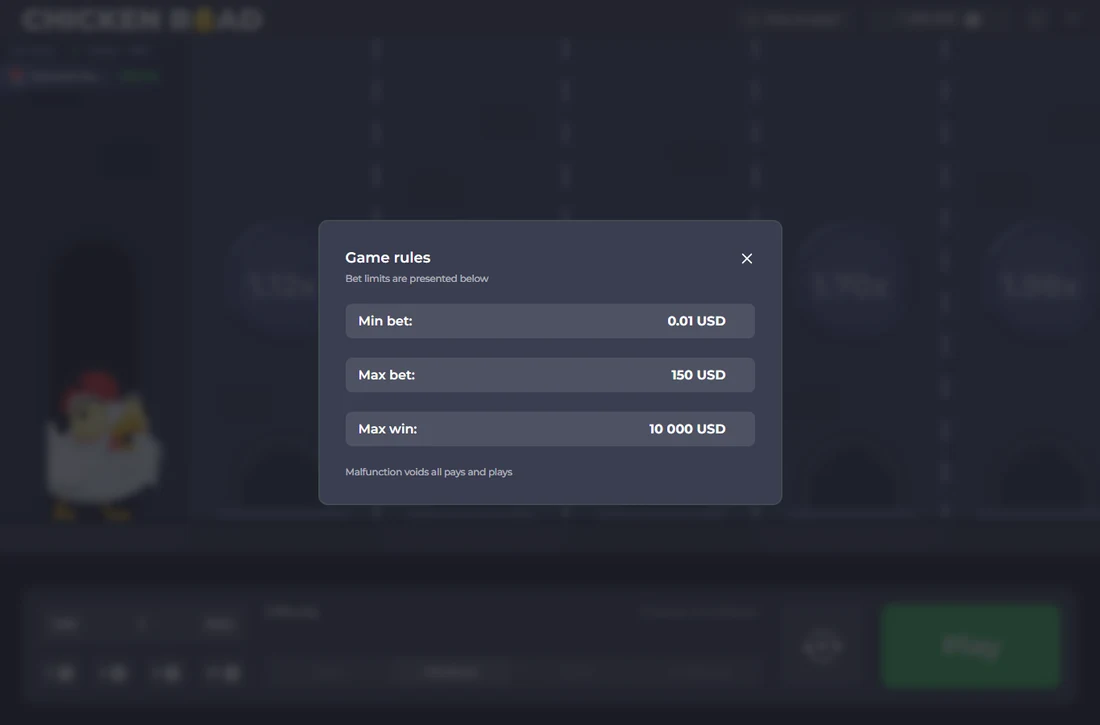
First identify the edition. Next read the current rules and currency. Locate both the advance and cashout actions. Use virtual practice where the provider makes it available in your location. If the original demo is unavailable, a diagram can explain the arithmetic, but it cannot substitute for an observed live round. Our demo page states the current launch limitation and offers the official provider route without an APK download.
On a mobile browser, inspect the entire control panel before touching a play action. A bottom browser toolbar, landscape rotation or an oversized embedded frame can hide the amount or cashout button. If you cannot see what you are committing and how to end the round, stop interacting until the layout is readable. Fullscreen can improve space; it does not change the game’s probabilities or verify the operator.
For account play, check the actual operator domain, eligibility, withdrawal conditions and available payment methods before depositing. The game name is not the account owner. The Philippine context matters: a promotional page mentioning GCash is not proof that the game is currently accessible inside the GCash app. Our app identification guide and payment guide answer those local questions separately.
Finally, record a complete round rather than a highlight. Keep the stake, selected mode, intended exit, returned amount and settled balance. If you stop early, the unplayed later path is unknown. If the connection interrupts settlement, label the record incomplete until the history resolves it. These habits make a future comparison interpretable and prevent a neat-looking chart from quietly inventing outcomes.
Follow one recorded round through its actual controls
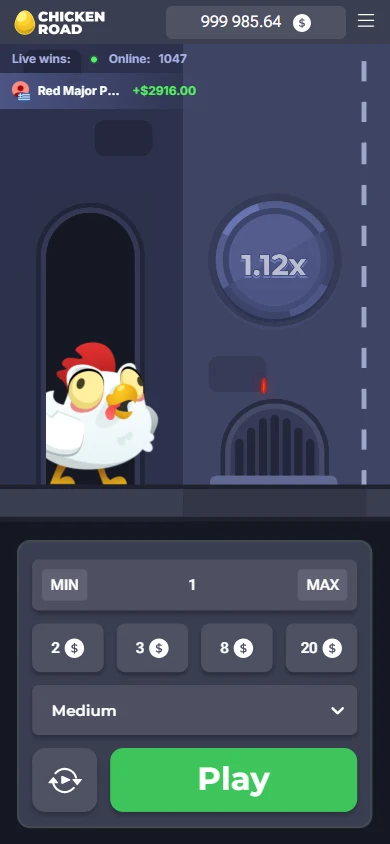
Our fifth recorded attempt reached the chosen target. We had selected Medium and a 1 USD stake before pressing Play. The game accepted that stake and attempted the first crossing automatically. This matters because Play is already a risk decision: the first step can fail before you make any further choice. GO is the continuation button after a successful step, not a separate confirmation needed to start the first crossing.
The first safe step offered 1.12 USD. Continuing raised the offer through 1.28, 1.47 and 1.70 USD. The fifth safe step offered 1.98 USD. These amounts all belonged to one open attempt with one 1 USD stake. They were not five separate credits added to the balance. Adding them together would invent winnings that the game had never paid.
At that point we selected Cash Out. The accepted response finished the round and credited 1.98 USD. The round’s own net result was therefore +0.98 USD. Four previous attempts had lost 1 USD each, so the cumulative result after this first winning cashout was still −3.02 USD. This is an actual recorded example of why the last winning card and the session balance tell different stories.
The order of decisions also shows why a strategy needs a specific step or available multiplier. “Cash out at 1.50×” cannot literally select a 1.50× offer in this Medium sequence. You must choose whether to take 1.47× or continue to 1.70×, or define the rule as the first offer above 1.50×. The last choice attempts another crossing and changes the exposure. A rounded number in a guide should not hide that extra action.
After settlement, the amount can be checked against the history. Opening balance minus 1 USD plus 1.98 USD must equal the closing balance for this attempt. If the screen briefly freezes, inspect the settled state instead of judging by whether the celebration finished. A quoted return can disappear on a collision; an accepted and reconciled cashout is a completed result. The useful evidence is the sequence and balance, not the prettiest frame.
Keep the same distinction when you record your own practice. Write one row per accepted stake and include the final payout, even when it is zero. Add a field for difficulty and target. A record containing only successful screenshots cannot measure the session return. Our RTP and mechanics page follows these states in an original diagram and explains the limits of the seed checks. The strategy page compares earlier exits only where the observed path supports the calculation.
These recorded amounts are USD. Peso examples elsewhere are hypothetical calculations, so they must not be read as a tested PHP account configuration or a currency conversion from the demo.
Chicken Road: quick answers
Is Chicken Road the same as Crossy Road?
No. A similar road-crossing theme does not establish the same publisher or rules. This guide concerns INOUT Games’ Chicken Road. Identify the product shown on your screen before using the examples.
Can I withdraw a free-demo cashout?
No. Demo credits are practice units. A game cashout settles the demo round; it does not create a bank or wallet payment.
Does 98% RTP mean I win 98 out of 100 rounds?
No. RTP describes theoretical returned value relative to stakes over a long run. A success frequency needs the actual payout and probability distribution.
What is the basic rule for beginners?
Know the stake, selected difficulty and cashout control before starting. Choose a practice exit in advance and calculate the net result, including earlier losses. This improves clarity, not the odds.